

Puffin bills glow under UV light
During the breeding season, Atlantic Puffins develop photoluminescent structures on their bills.

This week, on April 14, it’s World Puffin Day! 🎉 I’m celebrating these wonderful birds with a two-part Beaks & Bones series on fascinating Puffin science facts. This is part 1. Let’s get started!

It was two deceased Atlantic Puffins that first led researchers to discover a rather special characteristic of Puffins’ bills. Under UV light, parts of the bill glowed with a bluish hue—a sign of photoluminescence.
Photo—what!?
Photoluminescence is the emission of light by a material after it absorbs photons. In simple terms: you shine light of a certain wavelength onto an object, and the object re-emits light of a different (longer) wavelength.
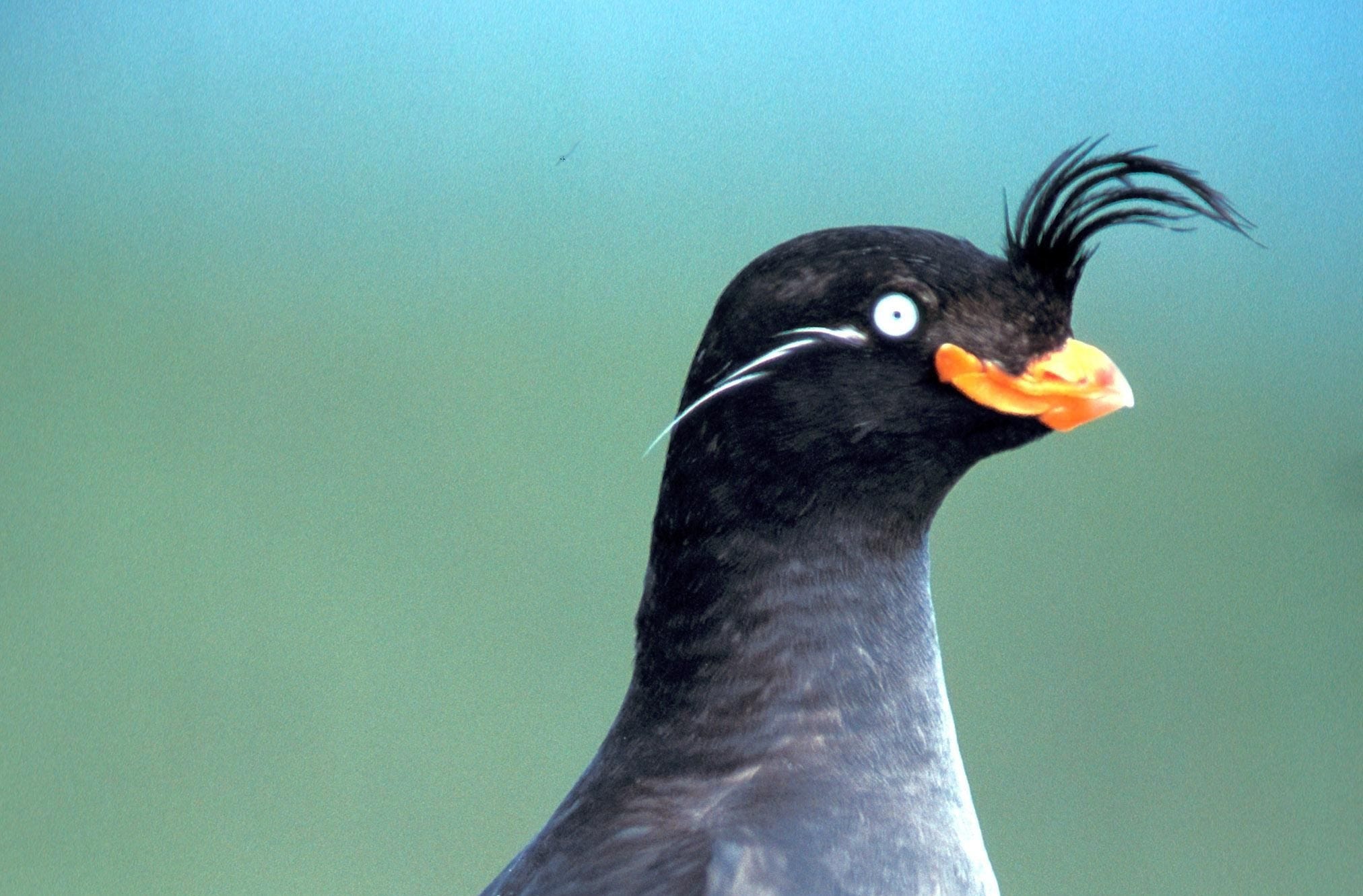
Photoluminescence had previously only been described in the Crested auklet (Aethia cristatella), whose luminescent beak plates may play a role in mate choice during the breeding season1.
After discovering the glowing beaks in the deceased puffins (Fratercula arctica), a team of researchers from the UK, Canada, and the USA investigated this phenomenon further in three living individuals from Petit Manan Island, Maine, USA2. They used a black-light torch to induce the beak glow and measured the emitted light with a spectrometer. To protect the birds’ eyes from the UV-A light emitted by the torch, the researchers designed “Puffin sunglasses” made from foam and waterproof neoprene, which blocked 99.9% of the UV radiation.
The experiments showed that the cere and lamella in particular emitted a glow under UV light. The strongest signal peaked at around 492 nm, a wavelength we perceive as cyan. A dead individual showed similar emission patterns to the tested living birds, suggesting that the photoluminescence persists after death.
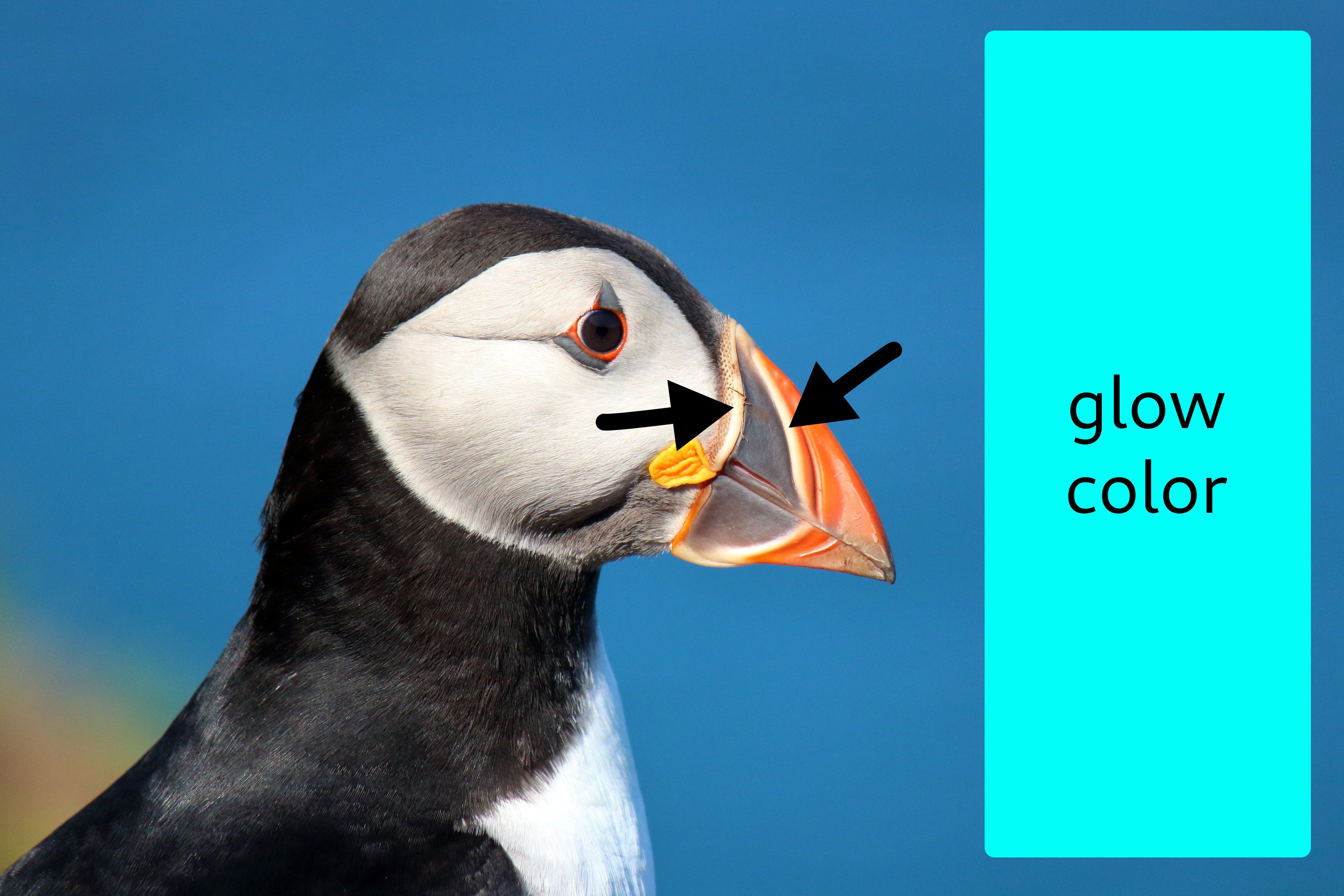
The function of a photoluminescent bill in Atlantic puffins is still not fully understood. It is likely that it plays a role in mating behavior, because the beak structures that glow most strongly (the lamella plate and cere ornament) are shed after each breeding season. The glow of these structures may enhance visual signaling during territorial defense or mate attraction. The authors also suggest that the glowing bill could aid in chick provisioning: a luminescent beak may be easier to see in the dark burrows where parents feed their chicks.
Obviously, puffins don’t have black-light torches at hand to flaunt their glowing beaks when trying to attract potential mates. In the wild, the light emission is triggered by UV light from the sun and is much more subtle than what the researchers documented in this study. Exactly how puffins perceive this glow—and how they use it—remains a mystery.
If you want to see photos of the glowing beaks, click on this button to access the original article (I don’t have permission to post the image here):
Have a wonderful rest of the week! All the best,



Happy Puffin Day - love the science and thanks for the link to the paper - whether its photoluminescence for mating or feeding chicks its pretty awesome.
Birds will never cease to amaze us.