

Only 241 kākāpō are alive today
Here's how we try to save these charismatic flightless parrots from extinction. And how you can help.

On December 7, 2024, we adopted Nora. Nora is a kākāpō—a large, nocturnal, flightless parrot. And no, she’s not our pet bird. She lives on Codfish Island / Whenua Hou in southern New Zealand, pretty much on the other side of the globe from where we live.
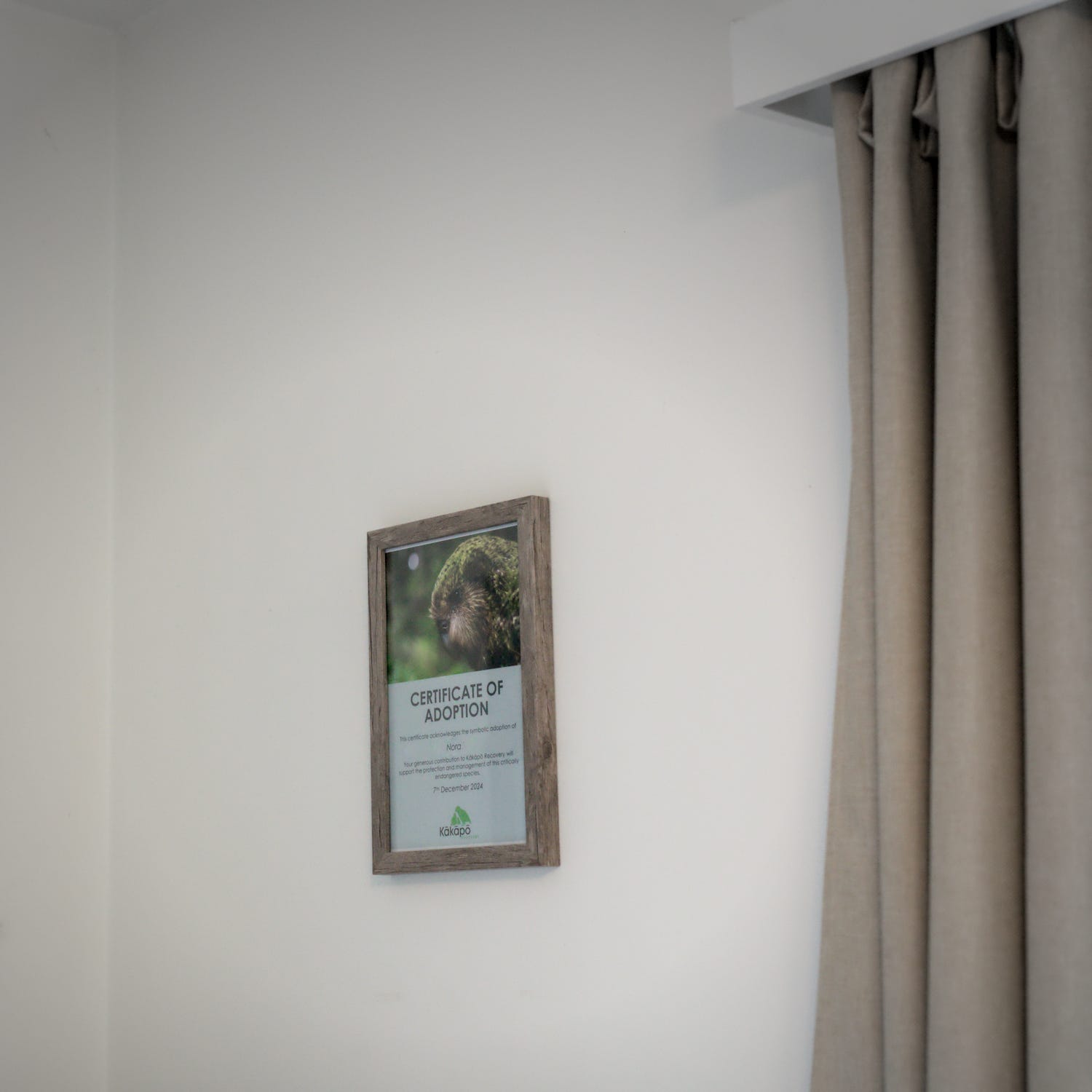
Nora is one of only 241 kākāpō that are alive today. These birds belong to the most critically endangered and rarest species on our planet. As is often the case with tragic situations like this, the species was doing fine before humans arrived in their habitat. We introduced predators, destroyed their habitat, and hunted them.
In 1995, only 51 individuals remained. That’s when the Kākāpō Recovery Program was established.
In this newsletter, you’ll read about the impressive efforts of the recovery team to save the kākāpō from extinction—and learn how and why you should adopt a kākāpō too.
The Kākāpō Recovery Team—a group of iwi1, scientists, rangers, volunteers, and supporters—puts tremendous effort into monitoring the population and improving breeding success. Today, none of the birds live in captivity, but all kākāpō wear a radio transmitter, which makes it possible to locate them for regular health checks.
Currently, all kākāpō-inhabited islands are predator-free thanks to strict pest control. Still, the population grows only slowly, as kākāpō breed only every few years—when there’s a mass fruiting (‘masting’) of the rimu tree. The fruit of these trees is the main food source for their chicks. The last breeding season was in 2022.
Not every breeding season is a success. In the past, 40% of the laid eggs have been infertile, and another 20% contained embryos that didn’t survive. These are unusually high levels of infertility, likely caused by inbreeding due to the small population size.
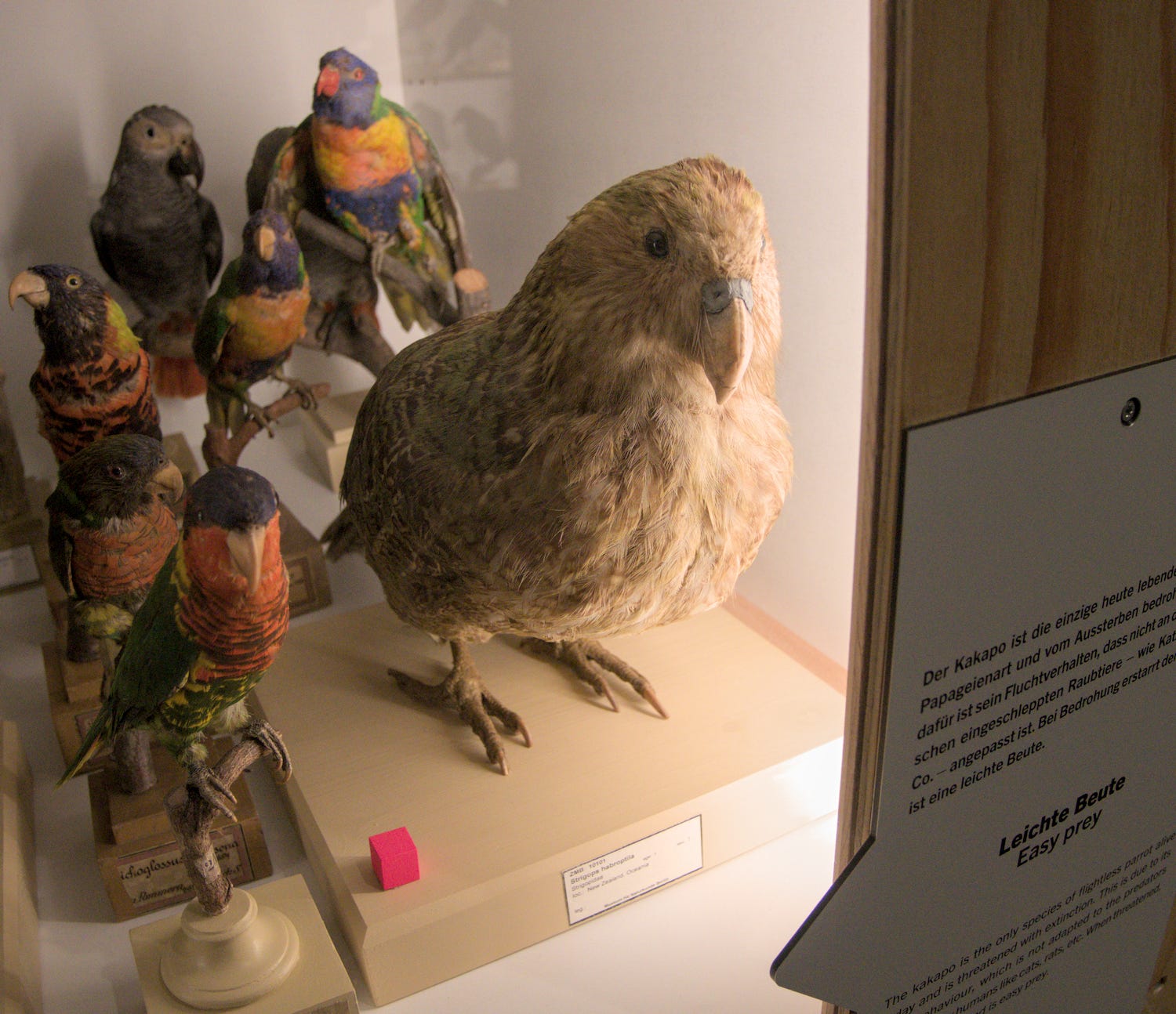
That’s why one of the most important tasks of the Kākāpō Recovery Program is to improve the success of breeding seasons—and one way this is done is through artificial insemination.
Artificial insemination does not replace but supplements the natural mating behavior. As the researchers write in a new study from May 20252, artificial insemination helps to reduce inbreeding by choosing pairs that aren’t closely related. In the 2019 breeding year, the approach increased the fertility of the second clutch from 29% to 70% and allowed two otherwise non-reproductive males to father offspring for the first time—an essential enrichment of the gene pool!
Now, there is exciting news. The Kākāpō Recovery Team reported on their website that next year (2026), after four years of waiting, will finally be another breeding year. Based on measurements of summer temperature patterns, they expect masting of the rimu tree. Hopes are high that, with the help of artificial insemination, we may see the population grow once again.
I will follow this with great excitement and keep you updated in this newsletter!
If you’re interested, you can also visit the website of the Kākāpō Recovery Program for plenty of interesting information.
So what does that mean for ‘our’ kākāpō Nora? Nora is a special bird. She’s the longest-known kākāpō alive, first discovered on July 8, 1980. We don’t know how old she is, but based on estimates, she’s at least 51 years old—maybe much older—but still not too old to bear offspring! She’s one of the 87 breeding-age females, and there’s a good chance she’ll become a mother once again next year. She has strong maternal instincts and has reared several chicks both as a mom and as a foster mom in the past. Once, she was even found incubating a sweet potato!
The year 2026 will be her 13th breeding season. I can’t wait to see how she does.
Would you like to support the work of the Kākāpō Recovery Program and help ensure that this breeding season will be a great success? Then adopt a kākāpō too! There are plenty of wonderful individuals to choose from.
Have a wonderful rest of the week! All the best,

Image credit preview photo: iStock.com/Lei Zhu
Previous posts that might interest you:
Why do woodpeckers not get stuck in trees?
Owls can look to the left by turning their heads to the right
Birds in same-sex pairs successfully rear chicks
Iwi are social units in the New Zealand Māori society.
How do species recover from such a low population number? Wouldn't the low genetic diversity really affect them in the long run? (I hope not, I love kakapos!)
The kakapo are extraordinary; so are those trying to help them breed back. It may be pointless in the longer scheme of things…but in the now, I can’t think of anything more worth doing. Thank you for sharing the photo of Nora. I think of these birds remarkably often. Centenarian nocturnal parrots—what a glory.
Sure would like to see someone find a Secret Moa (and there were many species).
Imagine living at a time before ecological consciousness, when humans thought that Nature was this unlimited cosmic storehouse from which humans could endlessly take with no forethought. Like some people use “credit” cards, or school debt, today.
Being a lifelong tree-hugging eco-freak (etc.) I reflect on this when “knowing too much” feels too heavy. How much worse to live in murderous profligate innocence.